The complete guide tostickman story videos
Learn why stick-figure stories work, which story type and look fit your channel, how to make a video step by step, and how to grow a stickman channel.
Why stick-figure story videos work
A stick-figure story is a narrator telling a story over simple drawings, one picture per beat. The drawings are plain enough that nothing distracts from the words, so the story does the work: a strong hook, a turn in the middle, and a reveal at the end.
The format is faceless by design. Nobody appears on camera and the narrator is a voice, so a channel can tell any story, from a survival ordeal to how a machine works, without filming anything. Big stickman channels run hour-long documentaries and one-minute Shorts in the same style.
It also travels well. The same story works as a vertical Short and as a widescreen YouTube video, so one idea can feed both feeds.
Types of stickman story videos and which look to use
Stickman has five story types. You pick one on the first screen and it steers how the story is written.
| Story type | What happens | Example premise |
|---|---|---|
| True crime | An invented investigation: the disappearance, the clue, the twist. Every name and place is made up. | The night the bookkeeper vanished |
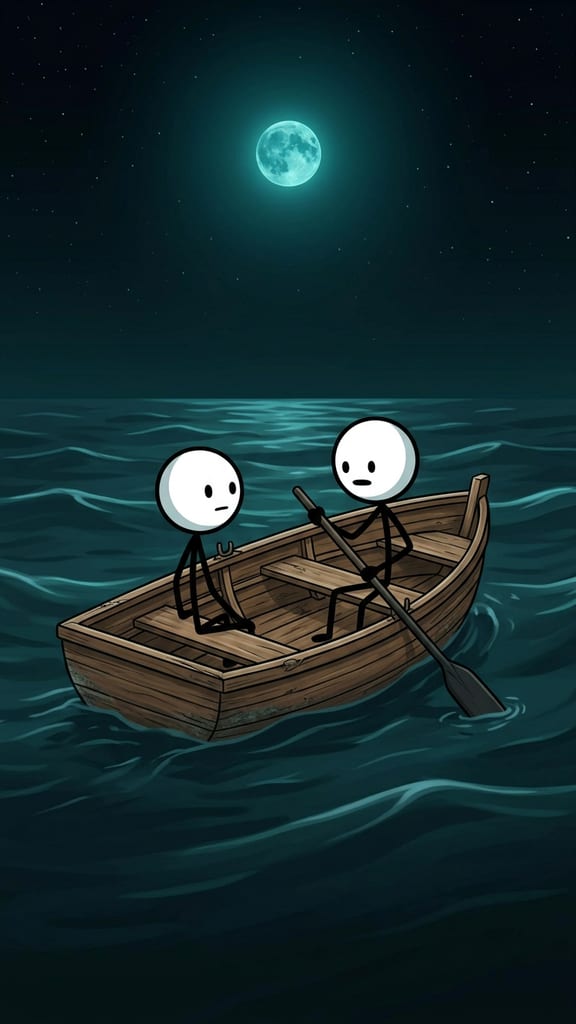
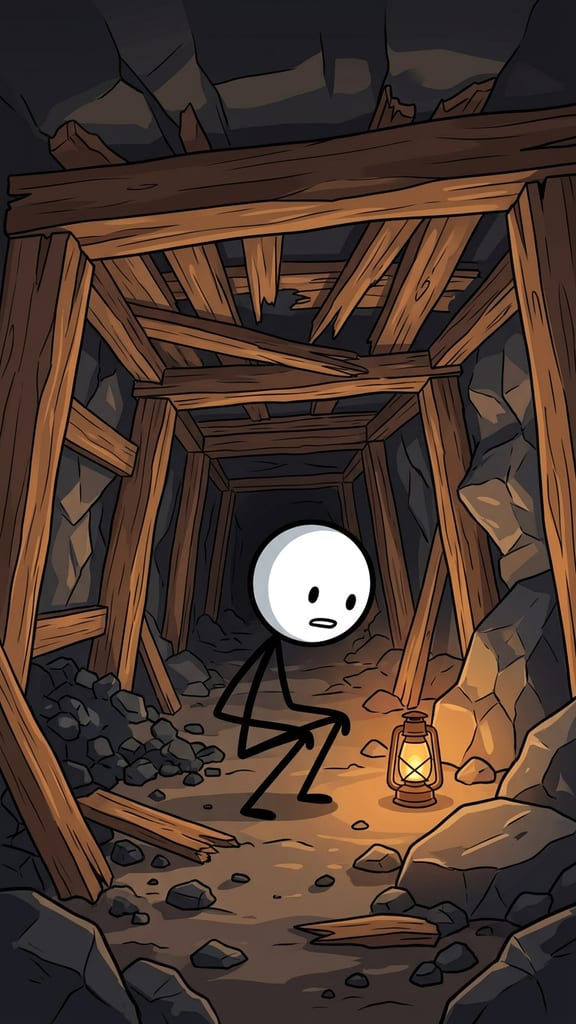
| Survival | One person against a place: a mine, a desert, a sea, a storm | 72 hours in a collapsed mine |
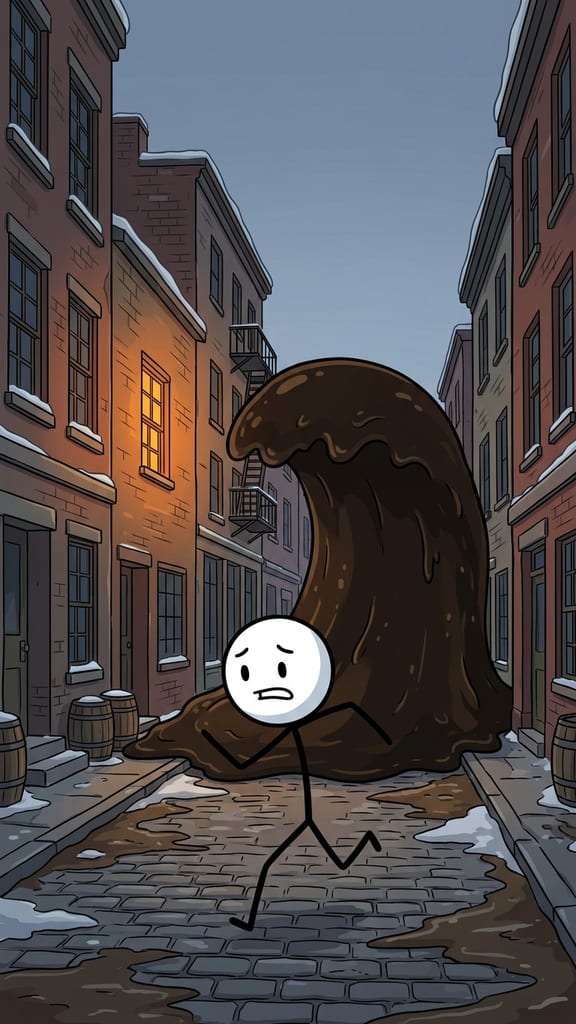
| History | A documented episode from before 1950, told through the people inside it | The Great Molasses Flood of 1919 |
| Life lessons | An everyday conflict at work or at home, with a reveal about someone’s motive | My coworker took credit for my project |
| How it works | One machine or process, walked one step per shot | How a submarine dives and surfaces |
Cartoon or Ink
- CartoonThe colourful look of the big stickman channels: white round-headed figures in detailed, flat-shaded scenes. The default, and the best fit for survival and history.
- InkClean outlines and flat colour on a plain warm background. Calmer and simpler, which suits how-it-works and life lessons.
How to Make a Stickman Video with GhostShorts
Five steps in the app, from your premise to the finished video. Click any screenshot to see it full size.
- Story typesTrue crime, survival, history, life lessons, how it works
- LooksCartoon or Ink
- FormatVertical 9:16 or widescreen 16:9
- Length30, 45, 60 or 90 seconds
- Shots5 to 19, one picture each
- NarratorOne AI voice for the whole story
- CaptionsWord by word, style and position you pick
How long should a stickman video be?
You pick the length before the story is written, and it sets the number of shots. Each shot is one picture with a line or two of narration.
- 30 seconds5 to 7 shotsOne hook and one reveal. Easy to watch to the end.
- 45 seconds8 to 10 shotsRoom for a build-up and a twist.
- 60 seconds11 to 14 shotsThe default. A full story with a middle.
- 90 seconds15 to 19 shotsFor widescreen YouTube or a story with more beats.
Fitting the story to the length
- Shorter gets finishedFor Shorts, 30 to 60 seconds is the sweet spot. If the story has one twist, do not stretch it.
- Widescreen can run longerOn long-form YouTube a 90-second story is fine, and a series of parts keeps viewers coming back.
Can You Post and Monetize Stickman Videos?
The videos you export are yours to post and monetize. YouTube and TikTok both ask creators to label AI-generated content, and both have a toggle for it at upload. Practical guidance, not legal advice: check each platform’s current terms.
Getting paid
Each platform has its own bar.
- YouTube: 1,000 subscribers plus 4,000 watch hours or 10M Shorts views in 90 days
- TikTok Creator Rewards pays only for videos over one minute
- Original stories beat batch output
Staying within the rules
What the story writer will and will not do.
- True crime is always invented; real cases with real victims are refused
- Nothing told from a perpetrator’s side, no mass-casualty attacks
- History stays before 1950 and never blames a group
Drawing stickman videos by hand vs GhostShorts
By hand, a stick-figure story means writing a script, drawing every frame, recording a voiceover and syncing captions in an editor. Here is how the two compare.
| Step | By hand | GhostShorts Stickman |
|---|---|---|
| Script | Write every beat yourself | Written from your premise, split into shots |
| Drawings | Draw each frame in a drawing app | A stick-figure picture for every shot, regenerate any one |
| Voiceover | Record yourself or hire a narrator | An AI narrator for the whole story |
| Captions | Sync by hand or use a separate tool | Word-level captions timed to the narration |
| Formats | Re-edit for Shorts and for YouTube | Pick vertical or widescreen before you start |
Tips for growing a stickman channel
The channels that grow post steadily and pick sharper premises.
Open on the stakes
“The tunnel collapsed behind him, and his lamp had four hours left” beats “This is a story about a miner.”
Be specific
Name the place, the year and the pressure. A specific premise gives every shot something to draw.
Pick one lane
Stack 10 to 20 stories in one story type before you branch out, so the platforms know what your channel is.
Keep one look
Stay with Cartoon or Ink across a channel, so a viewer recognizes your videos in the feed.
Use both formats
Post Shorts to find viewers and widescreen stories to keep them watching longer.
Cross-post everywhere
Post to YouTube Shorts, TikTok and Reels; performance varies by platform. For another faceless story format, try Reddit story videos.